
Choosing Laser Skin Tightening: The Advantages, Explained
December 10, 2024
If you're researching laser skin tightening, here's the direct answer: lasers can genuinely tighten skin for the right candidate. Most true laser tightening is done with non-ablative devices that heat the dermis without removing the surface, triggering collagen remodeling that may firm mild-to-moderate laxity over a series of sessions. That's different from ablative laser resurfacing, which removes the outer skin layers to rebuild texture, and from fractional lasers, which treat the skin in thousands of tiny columns — ablative or non-ablative — to shorten recovery. How much benefit you see depends on the laser type, wavelength, energy settings, treatment depth, your skin type, the concern being treated, and — not least — the training of the person holding the handpiece.

One thing to know up front: Newport Beach Skin Tightening does not offer laser treatments. We work with non-laser energy — radiofrequency, focused ultrasound, ultrasonic cavitation, microneedling with AQ growth factors, and red light therapy. This guide exists because many of our clients researched lasers first, and an honest comparison helped them decide.
The Real Advantages of Laser Skin Tightening
- Proven collagen stimulation. Lasers have decades of clinical use for texture and firmness.
- Precision. A skilled laser provider can target specific depths and zones.
- Combined benefits. Many lasers may improve pigment and fine lines at the same time as laxity — especially fractional resurfacing devices.
No laser is automatically superior, safer, or right for everyone. The same device can produce excellent results on one person and disappointing or harmful ones on another, depending on settings and skin type.
The Trade-Offs Lasers Come With
- Recovery time. Ablative laser resurfacing typically involves days of redness, peeling, and social recovery; even gentler non-ablative and fractional treatments can leave skin pink and sensitive.
- Skin-tone limitations. Some lasers carry higher risks of pigment changes on medium and deeper skin tones.
- Operator-dependent results. Settings that are too aggressive can burn or scar. One of our clients came to us after an aggressive laser elsewhere — you can see her results in this before-and-after case of rejuvenation following a previous laser treatment.
- Cost per series. Meaningful tightening usually takes multiple sessions, and pricing varies widely — compare against our transparent pricing page.
For a fuller picture of what can go wrong and how often, read our guide to laser skin tightening side effects.
How Non-Laser Skin Tightening Compares
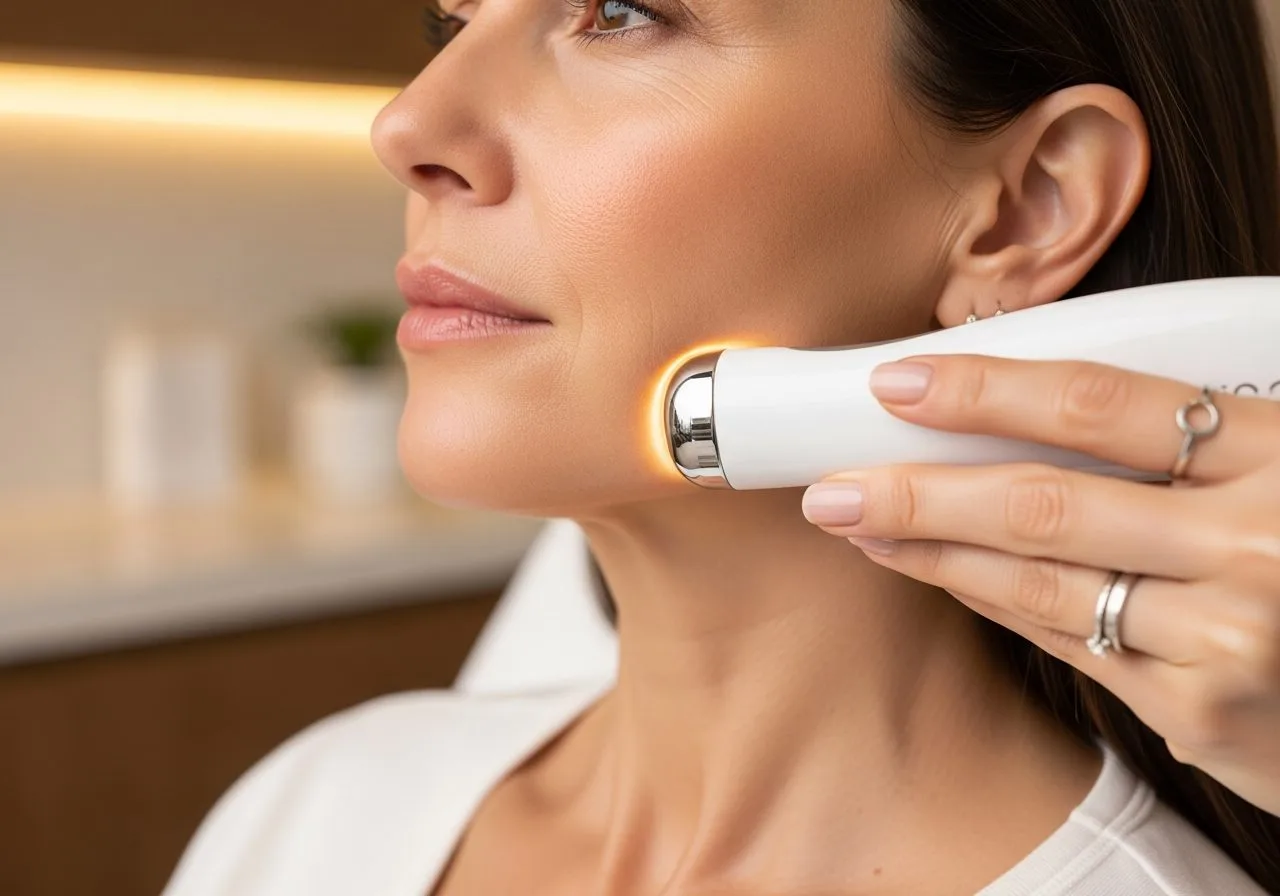
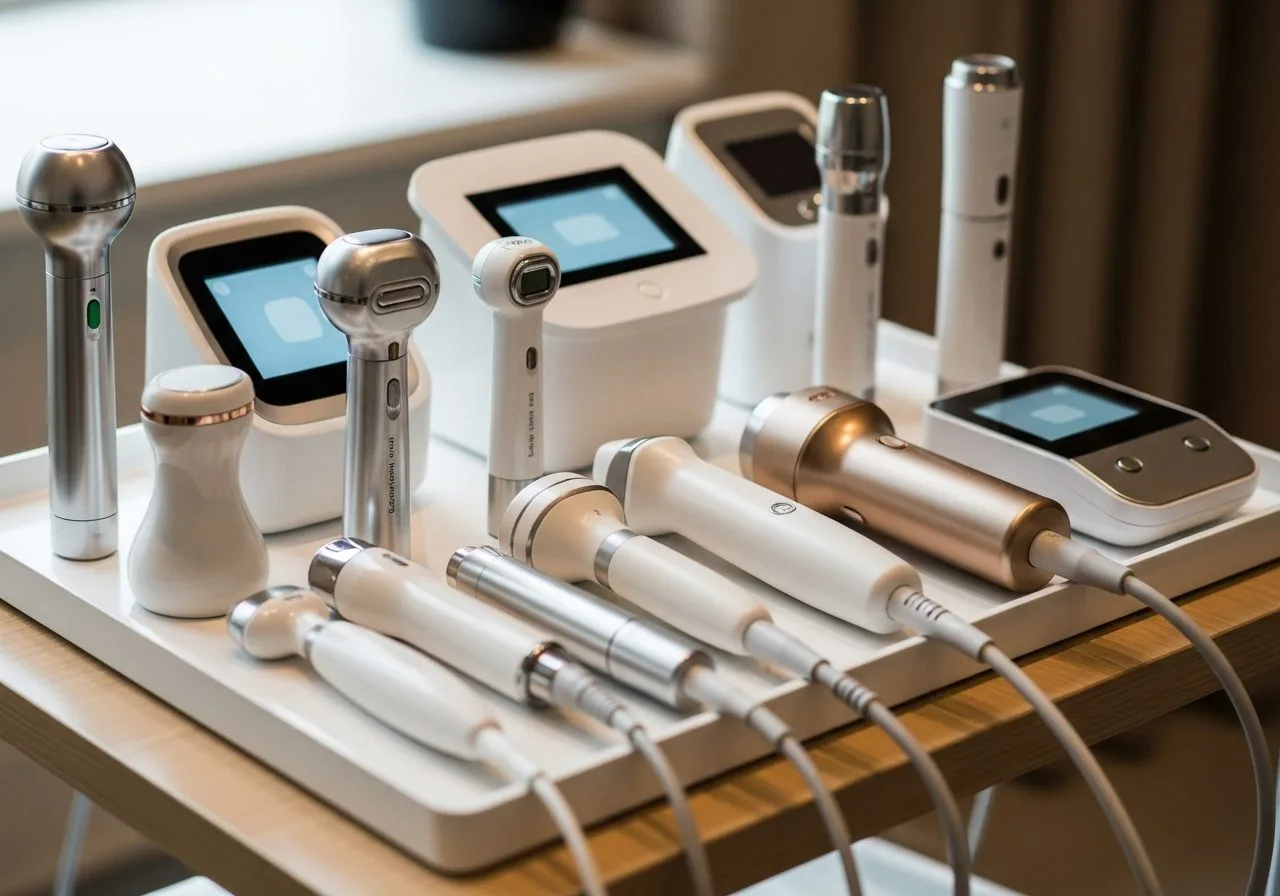
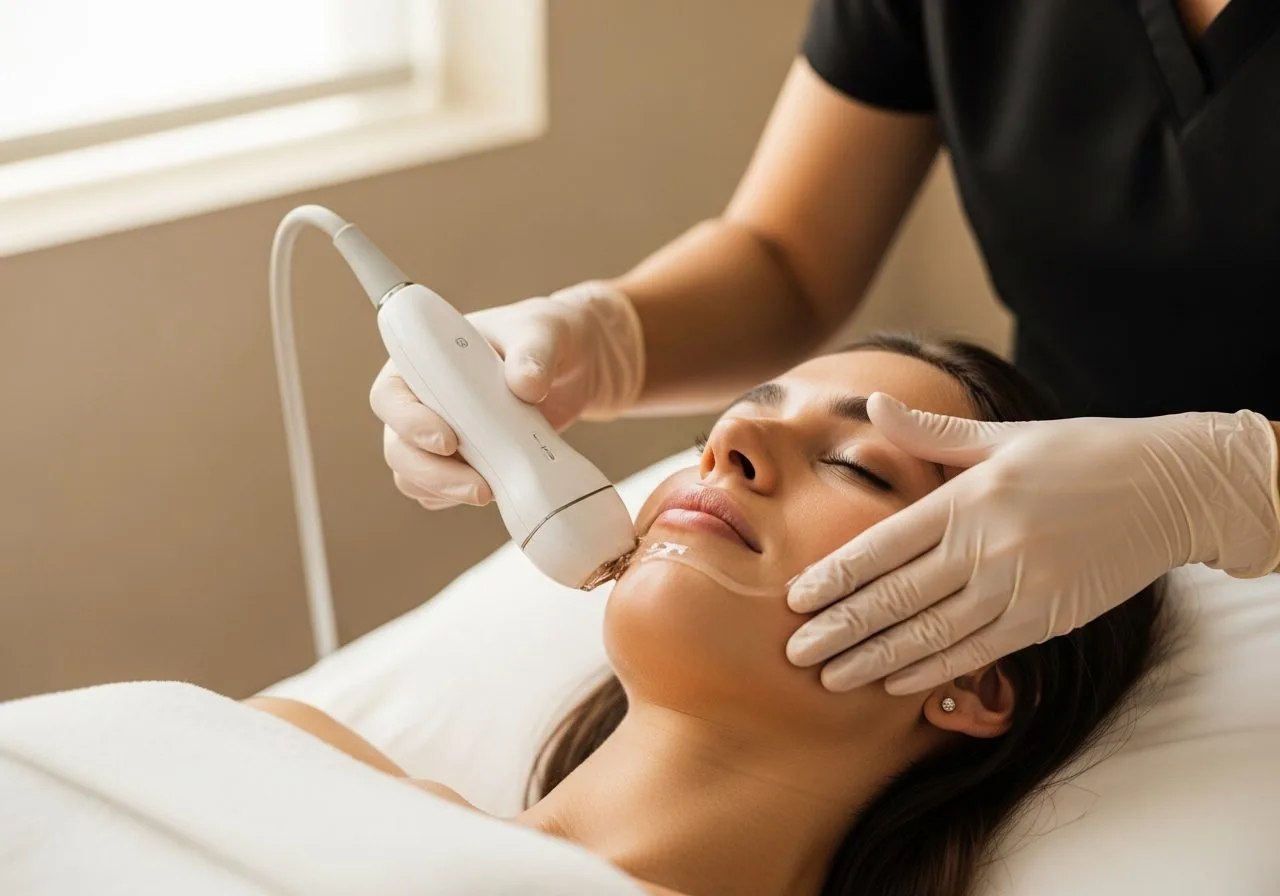
Radiofrequency and focused ultrasound are not lasers — they deliver heat with radio waves and sound waves rather than light — and they reach the deeper layers where laxity actually starts without disrupting the skin's surface. Our approach layers up to seven technologies in one session — Apollo TriPollar radiofrequency, ultrasonic cavitation, Ultherapy focused ultrasound, microneedling, AQ Human Fibroblast Growth-Factor Skin Solution, red light therapy, and near-infrared therapy. If you want to understand how the RF component works on loose skin, see our radiofrequency skin tightening treatment page; for the ultrasound side, see Ultherapy.
For most people there is minimal downtime — temporary redness, warmth, or mild swelling can occur and usually settles quickly. That surface-sparing quality is the main reason many of our clients chose non-laser tightening after comparing both.
Neither approach is universally better. Lasers remain excellent for resurfacing-dominant concerns like sun damage and etched lines. Energy-based tightening tends to suit people who want firming without visible recovery.
Who Is a Good Candidate — and When to See Another Provider
Non-laser skin tightening suits adults with mild-to-moderate laxity who prefer to avoid surgery, injections, and downtime. If you have significant sun damage, deep etched wrinkles, or precancerous lesions, a board-certified dermatologist with laser expertise is the right first stop. Severe laxity may only respond to surgical lifting — a consultation with a licensed surgeon is the honest recommendation there.
Individual results vary.
Hear From Real Clients
Watch unscripted stories on our video testimonials page, or browse answers to common questions in our skin tightening FAQ. If you'd like a personal comparison of your options — laser and non-laser alike — we're happy to talk it through with no pressure.
Your Consultation Awaits
Ready to See Real Results?
Book a free, no-pressure consultation with James Hooper, Founder and Sole Creator of the Butterfly Facelift®. Consultations and treatments are available by appointment at both our Newport Beach Corporate Office & Facility and Costa Mesa Private Studio & Facility. We’ll confirm the appropriate location for your selected service when your appointment is scheduled.
A consultation does not guarantee candidacy or results. Individual experiences vary.